Introduction to the 2026 UAE VAT Amendments
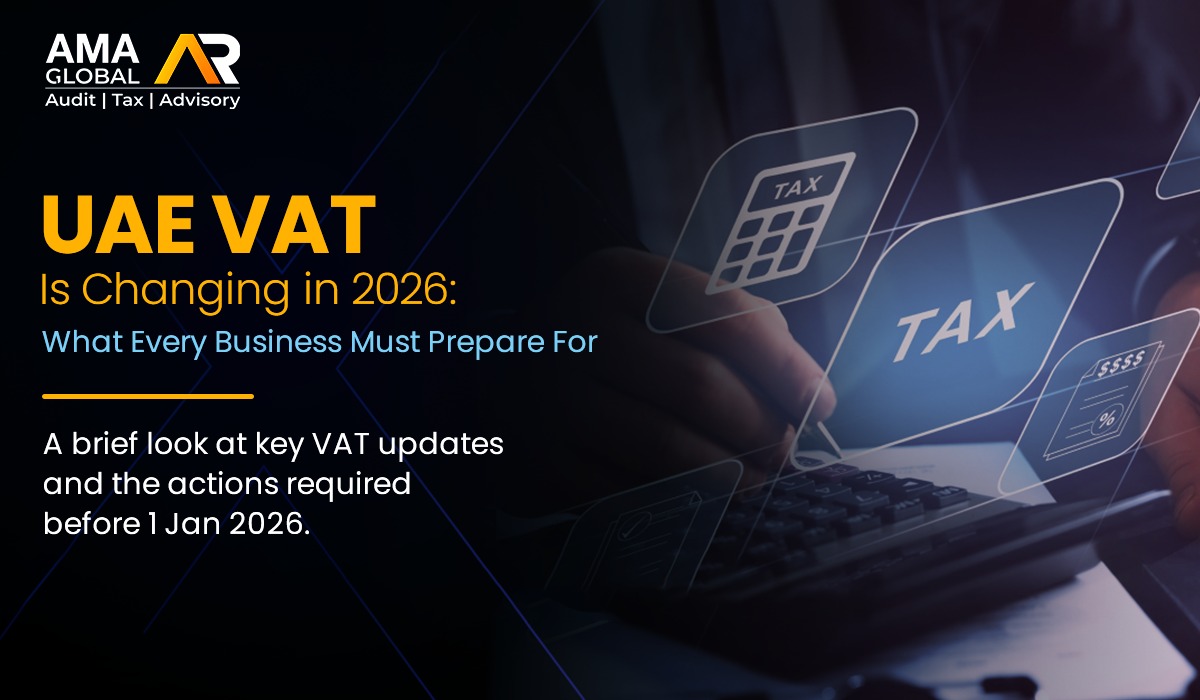
The question of How UAE VAT will change from 2026 has become one of the most important topics for businesses operating across the Emirates. With the release of Federal Decree-Law No. 16 of 2025 on 01 October 2025, the UAE introduced several targeted adjustments to the VAT system—some small in appearance, but significant in impact. Even though the changes span just a few pages, the amendments reshape how businesses handle refunds, claims, due diligence, input tax, supply-chain verification, and compliance obligations.
These changes represent some of the most meaningful updates to the VAT regime since its introduction in 2018. Businesses with pending or rejected refund claims must pay special attention, as the law directly addresses long-standing pain points that have historically caused delays and disputes.
Overview of Federal Decree-Law No. 16 of 2025
Federal Decree-Law No. 16 of 2025 makes strategic amendments to the UAE VAT Law (Federal Decree-Law No. 8 of 2017), targeting four main areas:
- A new Article 54 (bis) governing rejection of input tax related to tax-evasion-linked supply chains.
- The repeal of Article 79 (bis) on statute of limitation rules.
- Revised wording of Article 48(1) simplifying reverse charge compliance.
- Revised wording of Article 74(3) introducing a five-year cap on excess input tax.
Altogether, these changes aim to strengthen compliance, enhance clarity, protect the tax system, and reduce administrative conflicts between taxpayers and the Federal Tax Authority (FTA).
Why the Amendments Were Introduced
The UAE VAT system has matured quickly, and over the years, challenges have emerged:
- Inconsistent supply-chain documentation.
- Disputes over refund eligibility.
- Difficulties detecting Missing Trader Fraud schemes.
- Lack of clarity around statute of limitations.
- Administrative burdens involving reverse charge invoices.
- Open-ended treatment of excess input tax.
The 2026 amendments directly respond to these issues by:
- Creating a legal basis for rejecting claims linked to tax evasion.
- Standardizing procedural rules across all tax regimes.
- Providing clearer guidance for businesses.
- Increasing transparency and minimizing long disputes.
New Article 54 (bis): Purpose and Importance
Article 54 (bis) is one of the most impactful changes and directly influences How UAE VAT will change from 2026. It establishes clear rules for when the FTA can reject input VAT recovery, particularly in cases where tax evasion is detected somewhere in the supply chain.
Understanding the Link Between Input Tax and Tax Evasion
Before this amendment, many refund rejections were based on the argument that the FTA had not received VAT from the taxpayer’s supplier or a supplier further up the chain. Taxpayers argued this interpretation was incorrect — and for years, this dispute created backlogs, appeals, and ongoing litigation.
Article 54 (bis) ends that debate by giving the FTA a direct legal basis to deny recovery in specific scenarios.
How Missing Trader Fraud (MTF) Influenced the Amendment
Globally, MTF (carousel fraud) affects industries such as:
- Mobile phone trading
- Scrap metal
- Oil and gas
- Textiles
- Electronics
Because of the complexity of supply chains, even legitimate businesses sometimes become unknowingly entangled in fraudulent networks. The new article ensures a formal framework to distinguish genuine errors from risky supply-chain involvement.
Mandatory and Discretionary Rejection of Input Tax
When Rejection Is Compulsory (Actual Awareness of Evasion)
If the taxpayer knew a supply was linked to tax evasion and still deducted input tax, the FTA must reject it.
When Rejection Is Discretionary (Should Have Been Aware)
If the taxpayer should have known based on the circumstances (e.g., unrealistic prices, suspicious suppliers), the FTA may reject the claim.
Deemed Awareness Due to Insufficient Verification
If the taxpayer failed to follow FTA-required verification measures — still to be issued — then the taxpayer is deemed aware of potential evasion.
This “deemed awareness” clause will significantly raise compliance standards from 2026.
Compliance Expectations Under Article 54 (bis)
Expected FTA Measures, Procedures, and Conditions
The FTA is expected to release detailed rules covering:
- Supplier-risk checks
- Documentation standards
- Verification of supply authenticity
- Evidence requirements for refund claims
- Supply-chain mapping procedures
Supply-Chain Checks and Due-Diligence Requirements
Businesses will need to adopt a more structured compliance approach, including:
- Verifying supplier legitimacy
- Reviewing VAT payment histories (where possible)
- Conducting periodic risk assessments
- Retaining strengthened documentation trails
This represents one of the biggest practical changes in How UAE VAT will change from 2026.
Repeal of Article 79 (bis) and Its Impact
Article 79 (bis) previously governed limitation periods for audits and voluntary disclosures. Its repeal does not remove the statute of limitations. Instead, limitation rules now fall entirely under Article 46 of the Tax Procedures Law, ensuring consistent application across all tax types — VAT, Corporate Tax, Excise Tax, and future taxes.
This simplifies compliance and ensures uniformity.
Revised Wording of Article 48(1): Practical Simplification
Removal of the Self-Invoice Requirement for Reverse Charge
Taxpayers applying reverse charge no longer need to issue a tax invoice to themselves. This removes an unnecessary administrative step and aligns the law with global VAT practice.
Revised Wording of Article 74(3): 5-Year Limit on Excess Input Tax
A major change for finance teams is the new five-year cap on using or refunding excess input tax.
If the amount is:
- Not refunded, and
- Not used to settle liabilities within five years,
the right lapses permanently.
What Happens When Excess Input Tax Lapses
Once lapsed, it cannot be:
- Refunded
- Offset
- Carried forward
This raises the stakes for timely refund requests and proper reconciliation.
Real-World Implications for Pending and Rejected VAT Refunds
How Refund Disputes Will Change from 2026
Article 54 (bis) resolves years of dispute by giving the FTA:
- A direct legal basis for input-tax rejection
- A framework for assessing due diligence
- Clear justification for refund delays or denials
What Businesses With Pending Claims Should Do Now
Businesses must:
- Review supply-chain risks
- Compile enhanced documentation
- Prepare for potential audits
- Consider resubmitting claims once internal controls align with the new Article 54 (bis) requirements
Transitional Period and Effective Date
All amendments take effect on 01 January 2026, giving businesses time to adjust processes, internal controls, supplier assessments, and refund strategies.
Expected FTA Public Clarifications for 2026
The FTA is expected to issue clarifications explaining:
- Due-diligence expectations
- Transitional rules
- Excess input tax treatment
- Reverse charge documentation
- Impact on refund timelines
These clarifications will be essential reading for tax teams.
Strategic Actions Businesses Must Take Before 1 January 2026
Businesses should:
- Conduct VAT health checks
- Review old refund claims
- Accelerate use of excess input tax
- Document due diligence steps
- Update internal VAT manuals
- Train finance and procurement teams
- Strengthen supplier onboarding procedures
FAQs: How UAE VAT Will Change From 2026
What is the most significant VAT change coming in 2026?
The introduction of Article 54 (bis), which gives the FTA clear authority to reject input tax linked to tax-evasion-related supply chains.
Will older refund claims be affected?
Yes. Pending or previously rejected claims will likely be reconsidered under the new due-diligence framework.
What happens to excess input tax from 2026 onward?
It must be used or refunded within five years, or it expires permanently.
Do businesses still need to issue reverse charge invoices?
No. The revised Article 48(1) removes that requirement.
Does the repeal of Article 79 (bis) eliminate time limits?
No. Limitation rules are now fully governed by Article 46 of the Tax Procedures Law.
Will the FTA issue more guidance?
Yes. Public Clarifications are expected to guide businesses through compliance obligations starting in 2026.
Conclusion
The UAE’s 2026 VAT amendments represent a major refinement of the country’s tax framework. By introducing Article 54 (bis), creating a five-year deadline for excess input tax, harmonizing limitation rules, and simplifying reverse-charge requirements, the legislation creates a more structured, transparent, and efficient VAT environment.
However, the burden of compliance also increases significantly, particularly concerning supply-chain verification and due-diligence standards under the new tax-evasion rules. Businesses must urgently strengthen these procedures and documentation quality ahead of the 1 January 2026 effective date.
To successfully navigate this transition and ensure full compliance, businesses should seek expert guidance. AMA Global Audit Tax Advisory is poised to assist businesses in conducting comprehensive VAT health checks, implementing enhanced supplier onboarding processes, addressing pending refund claims, and training finance teams to meet the stringent new due-diligence expectations starting in 2026.

Monish Mohan is a versatile and accomplished Auditor, VAT Consultant, Finance and Accounts Professional offering over 18 years of experience in UAE VAT, Audit & Assurance, Finance management Advisory & Accounting & bookkeeping.